Water is so familiar that we rarely stop to question it. We drink it, cook with it, bathe in it — yet this simple substance makes up most of our bodies and nearly all life on Earth. But what if water is more than just a passive chemical compound? What if it carries information, energy, or even a kind of memory?
In this episode of Green Earth Essentials, we explore the fascinating, controversial, and deeply human ideas surrounding structured water and water memory — where science, ancient wisdom, and mystery intersect.
You can listen to the full episode right here on the website, and read on for an expanded overview of the themes we explore.
Water as Life’s Mirror
From space, Earth appears as a blue jewel — oceans, clouds, rivers, and rain moving through endless cycles of transformation. Our bodies reflect this same truth. We are mostly water, and every thought, heartbeat, and breath depends on it.
Water is not just something we consume. It is the medium through which life expresses itself — carrying nutrients, regulating temperature, shaping cells, and enabling communication within living systems. This raises a powerful question: if life depends so deeply on water, could water itself carry information about the life it touches?
The Origins of Water Memory
In 1988, French immunologist Dr. Jacques Benveniste shook the scientific world by suggesting that water could retain the “signature” of substances long after they were removed. His work, published in Nature, sparked excitement, skepticism, and fierce debate.
Although his findings failed replication under strict conditions and were ultimately rejected by mainstream science, the question he raised never fully disappeared. Was this simply experimental error — or was he probing a layer of reality science hadn’t yet learned how to measure?
Benveniste’s story reminds us that science advances not only through certainty, but through curiosity — and sometimes through uncomfortable questions.
The Fourth Phase of Water
Decades later, Dr. Gerald Pollack approached water from a different angle. Studying how water behaves near biological surfaces, he identified what he calls Exclusion Zone (EZ) water — a structured, gel-like state that forms near cell membranes and hydrophilic materials.
This form of water appears to hold an electrical charge and expand when exposed to light, suggesting it may store and release energy inside living systems. While still debated, Pollack’s work has opened new conversations about hydration, cellular energy, and how water behaves inside the body — not just in a glass.
The Emotional Imprint of Water
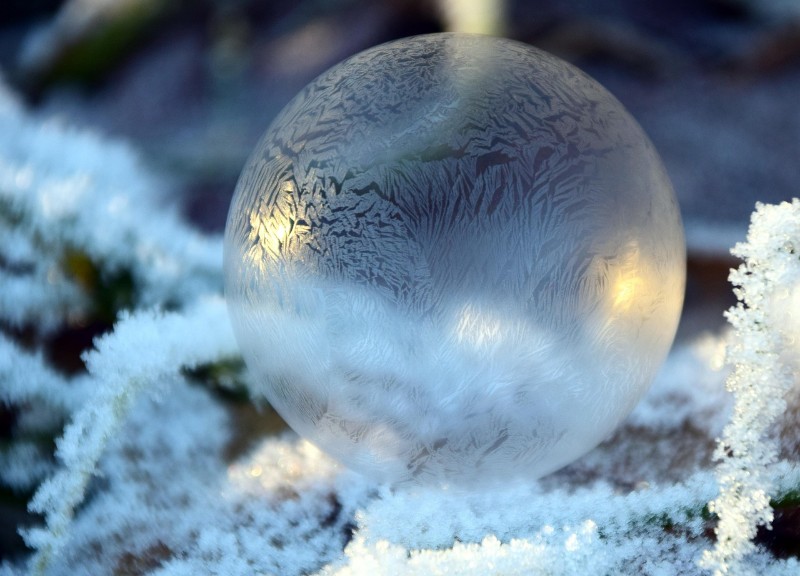
No discussion of water memory would be complete without Masaru Emoto, whose photographs of frozen water crystals captivated millions. Emoto claimed that words, music, and human intention influenced the shape of ice crystals — with loving messages producing symmetry and harsh words producing chaos.
Scientifically, his methods lacked rigorous controls. Yet symbolically, his work struck a chord. Even if water does not literally record emotion, our inner waters respond to our thoughts, breath, and state of being. Intention may not reshape molecules — but it reshapes us.
Ancient Wisdom & Sacred Water
Long before modern laboratories, cultures around the world revered water as sacred. From baptismal rites and sacred springs to Ayurvedic “living water” and Indigenous ceremonies, water has long been seen as a purifier, healer, and messenger between worlds.
These traditions suggest that humans have always sensed something subtle about water — something alive, relational, and worthy of respect.
Structured Water Devices & the Wellness Debate
Today, structured water has become a popular wellness trend, with vortexers, gemstone bottles, and “energized” water devices making bold claims. While current science does not support the idea of stable “hexagonal” water or permanent restructuring of H₂O, research into water behavior near cells continues to evolve.
What is clear is the power of mindfulness. When we slow down, hydrate with intention, and treat water as nourishment rather than an afterthought, our nervous system and awareness shift. Sometimes the benefit lies not in the device — but in the relationship.
A Mindful Relationship with Water
Whether or not water has memory in a scientific sense, our relationship with it matters. Gratitude before drinking, pausing to breathe, or simply acknowledging water as life-supporting can change how we feel in our bodies.
Water shapes our mood, our energy, and our sense of connection. In that way, it carries the story of life — through us.
Final Reflections
Perhaps the true memory of water isn’t stored in molecules, but expressed through living systems — through climate, ecosystems, and consciousness itself. Water connects us to the planet, to each other, and to every form of life that came before.
Continue the Journey
If this episode resonated with you and you’d like to go deeper, you can connect with me on Substack at
👉 https://substack.com/@greenearthessentials
That’s where I share extended reflections, written companions to episodes, and behind-the-scenes insights that expand on these conversations. The link is also available in the episode description.
And as always, you can listen to this episode right here on the website.
Until next time — stay curious, stay hydrated, and remember: the water within you is part of the same ocean that began it all.
— Michelle Jackson
 Green Earth Essentials